
Study Period in Perugia, Italy Launched the Continuation of the Free Art School’s Erasmus+ Programme
The study period for graduating painter students of the Free Art School took place in Italy during the second week of December. The programme included workshops at a local art academy, visits to museums and churches, and day trips to Assisi and Spoleto.
Fourth-year painter students spent a week-long study period in Perugia, Italy. The programme featured visits to the Free Art School’s partner institution, the Accademia di Belle Arti “Pietro Vannucci” di Perugia, a workshop organised by the academy, and guided visits to Perugia’s churches and museums. Highlights of the trip included day visits to the Basilica of Saint Francis of Assisi and to Spoleto Cathedral and Palazzo Collicola.
In addition to the students, the group was accompanied by painter and Rector Elina Merenmies, Study Secretary Ilse Rossander, and Docent and art historian Juha-Heikki Tihinen, who teaches at the Free Art School.
Travel Diary
Mikko Haiko, 4th-year student
We stepped out of the airport and felt the sun on our faces. Italy! Sun! The fourth-year painter students of the Free Art School, stiffened by the Finnish autumn and early winter, soaked up the light and nodded in agreement: “Sì!”. From Rome’s train station we ran to the Colosseum and back, drank our espressos, and jumped on the train to Perugia.
Perugia, a hill town founded along the Tiber River, welcomed us as darkness fell. We climbed to its medieval centre, found our hotel, practised saying buona notte, and fell asleep.
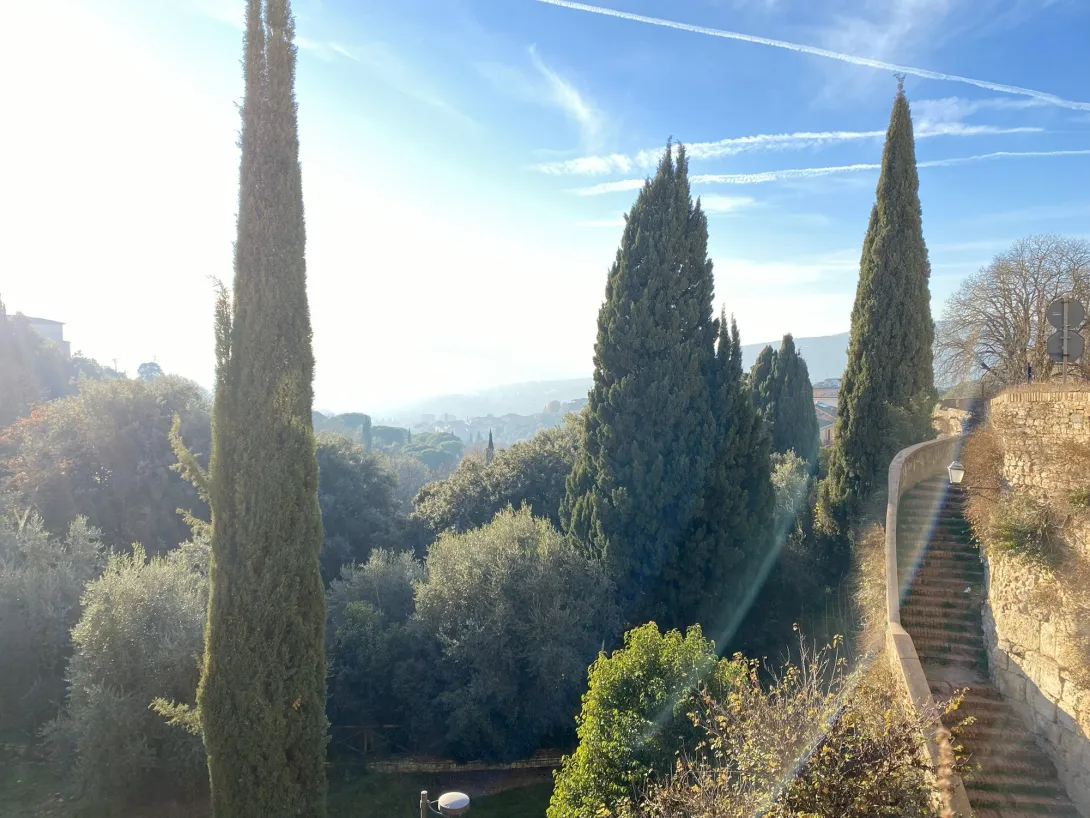
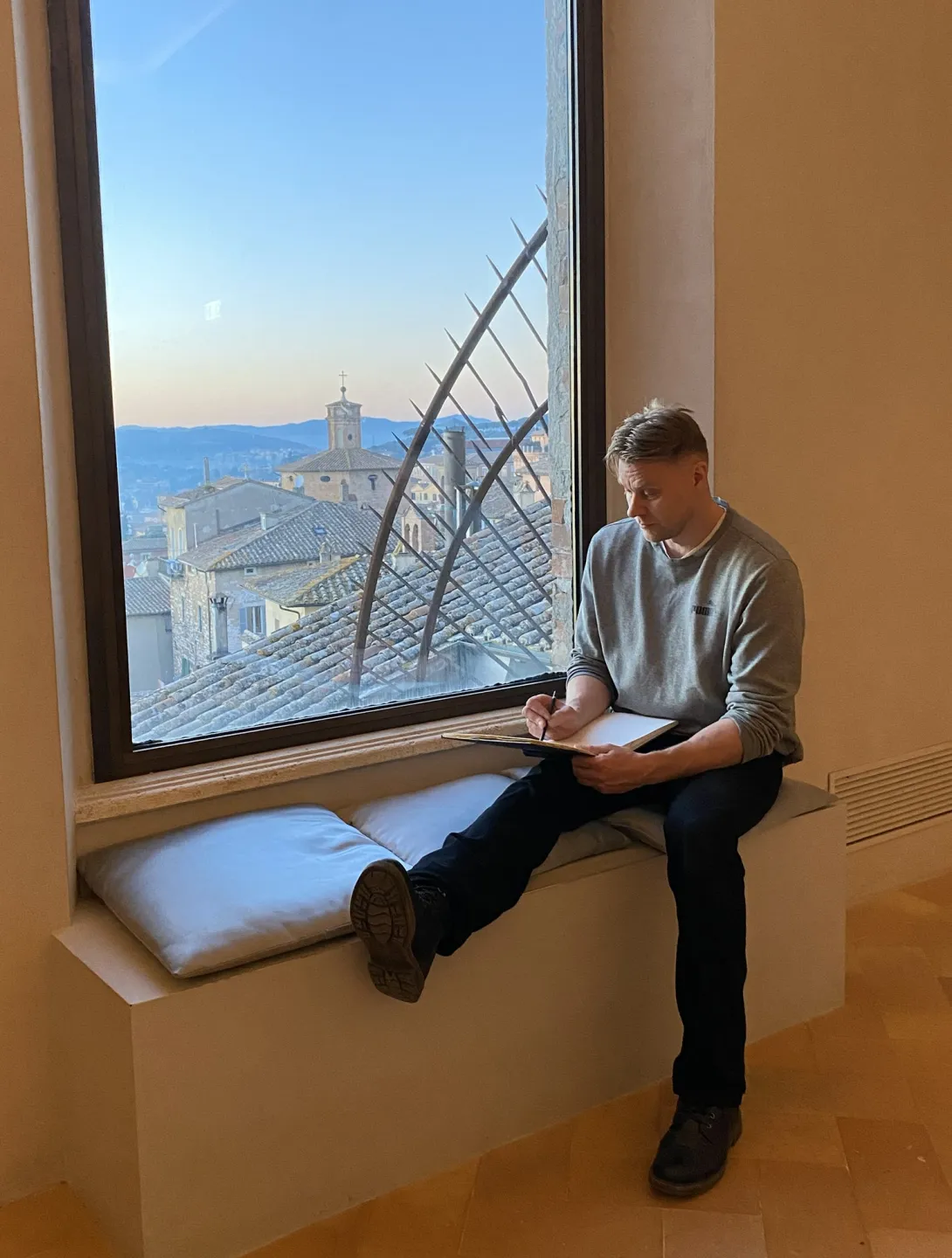
In the morning we rehearsed buongiorno and soon found ourselves marvelling at the courtyard of the Accademia di Belle Arti “Pietro Vannucci” di Perugia, the enormous window of the president’s office, and the sunlit valley view opening beyond it.
Dr Claudia Biagini and Professors Mario Consiglio and Lucilla Ragni introduced us to the academy and its history, especially Pietro Vannucci—Perugian painter, Raphael’s teacher, and a contemporary of Leonardo in Verrocchio’s workshop.
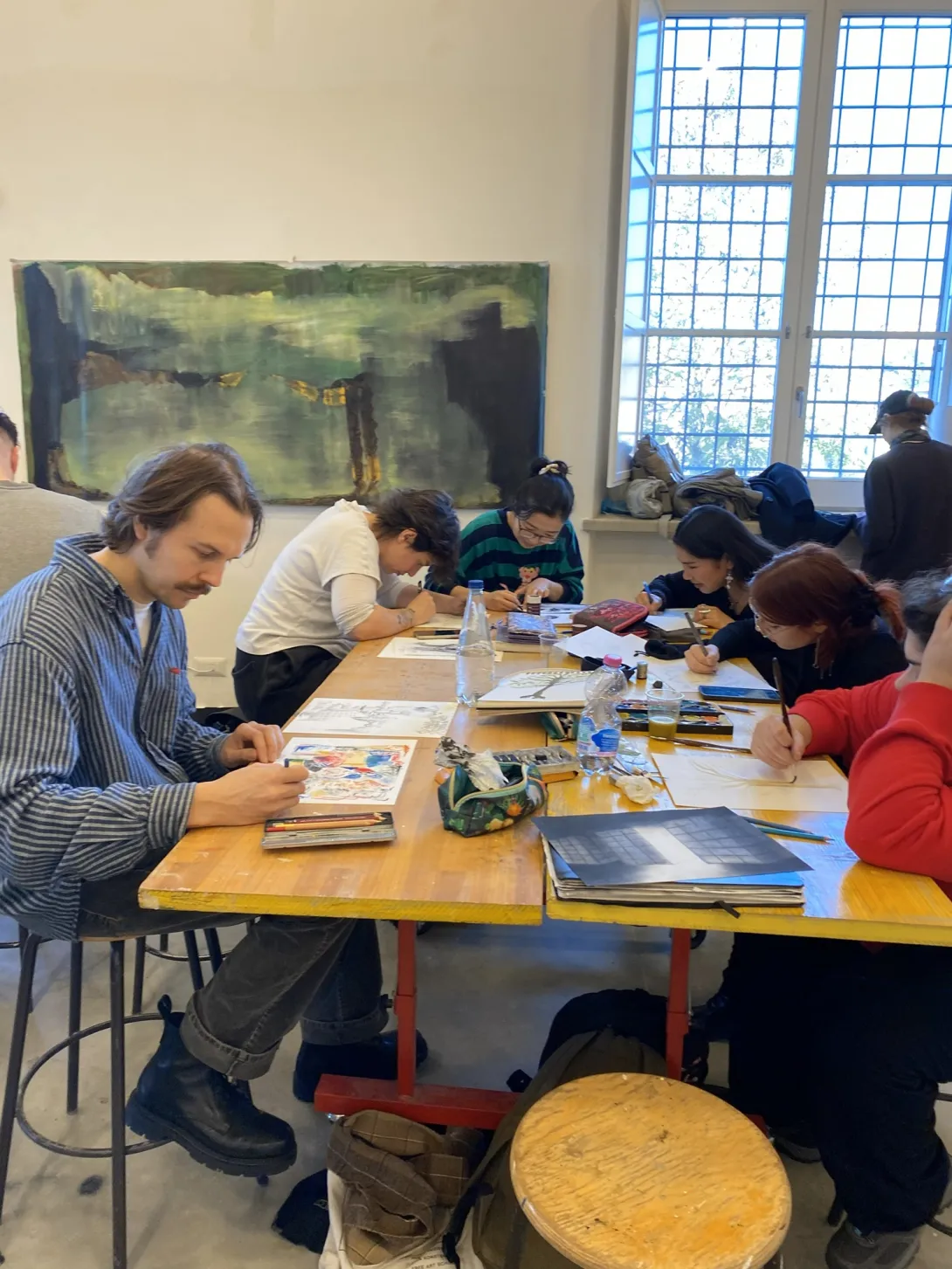
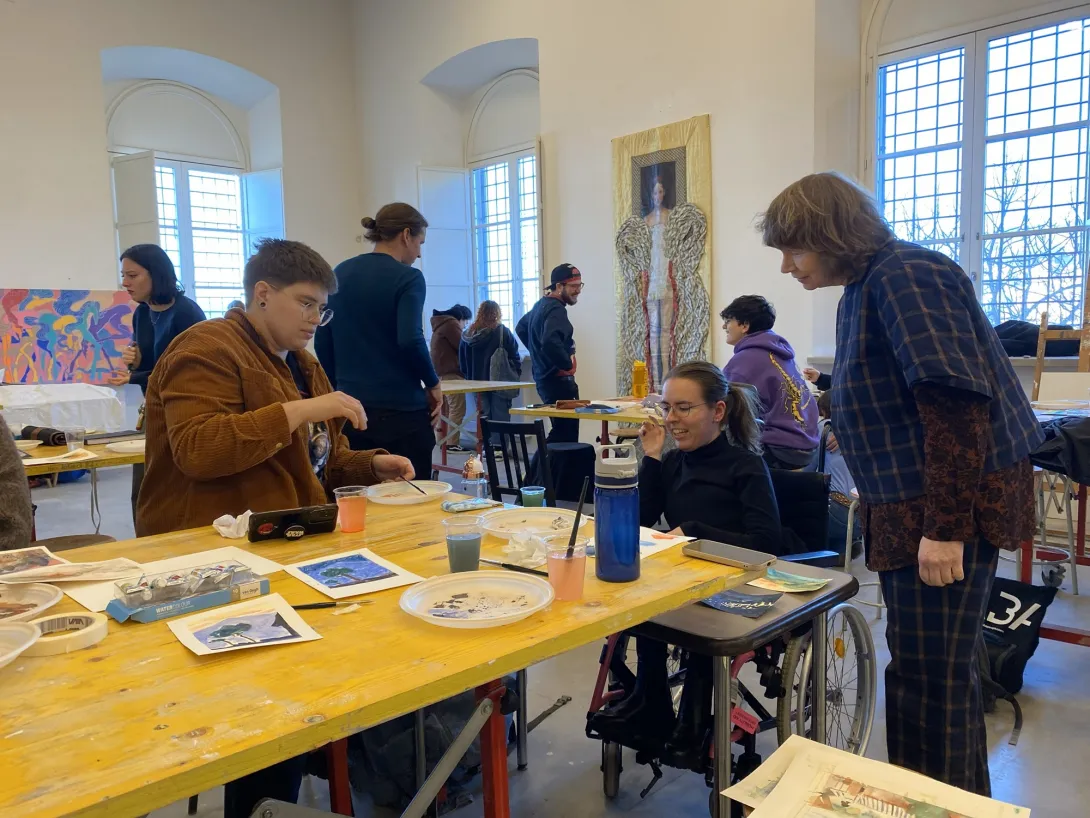
Students of the academy presented their works, after which we took part in a workshop painting and drawing “postcards”. These postcards—tools of communication and remembrance—were collected and will be assembled into a collective artwork in spring 2026.
We also visited the printmaking workshop, saw more student works and a remarkable collection of large, historic printing presses. Later, we explored the academy’s own museum, founded in 1573, featuring paintings and prints by teachers and students, as well as an extensive plaster cast collection, which we eagerly drew.
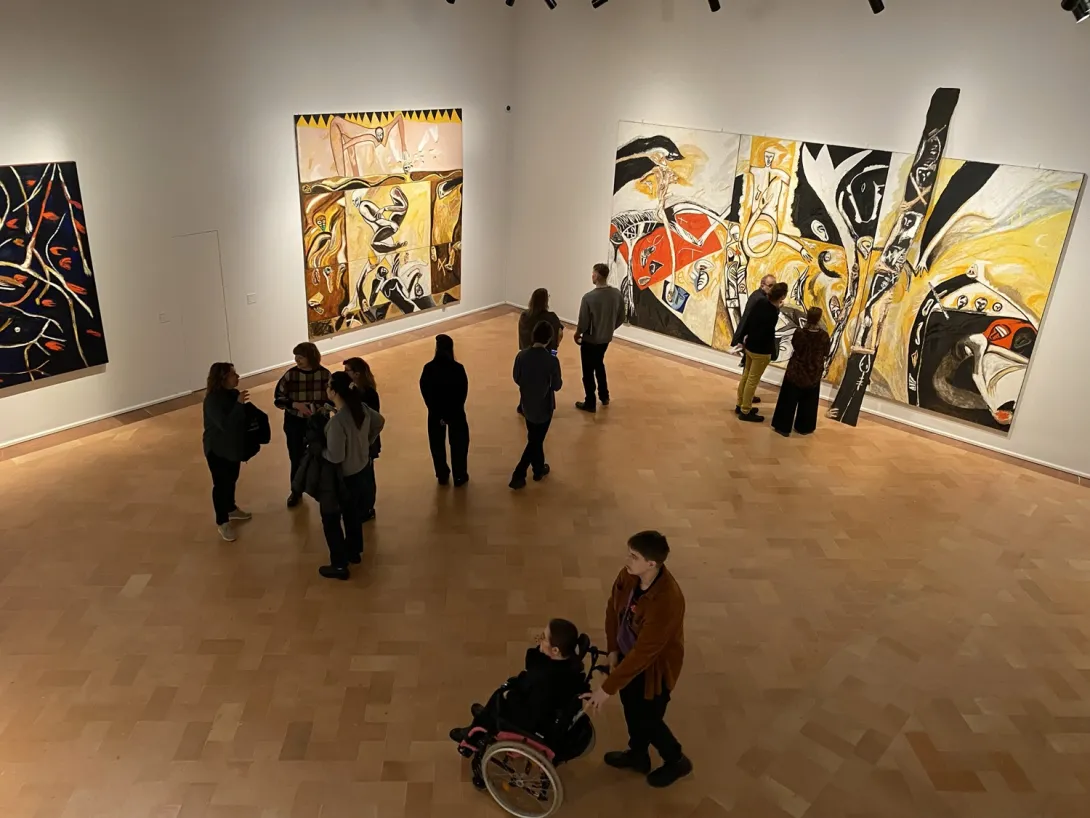
At the Galleria Nazionale dell’Umbria, we immersed ourselves in Renaissance art, viewing works by artists active mainly in the Umbrian region from the 13th to the 19th century. The museum also hosted Anthologica, a retrospective of contemporary artist Mimmo Paladino, a leading figure of the Italian Transavanguardia movement. At Museo Civico di Palazzo della Penna, we encountered, among other works, Joseph Beuys’ conceptual blackboards and Futurist paintings by Gerardo Dottori, known as the “father of Aerofuturism”.
A day trip to Assisi brought us face to face with the fresco-filled walls and ceilings of the Basilica of Saint Francis—works by Giotto, Cimabue and Simone Martini. This visual overload caused tears, repeated attempts to defy the no-photography rule, and at least one serious migraine. We wandered through the city’s churches as Juha-Heikki Tihinen contextualised styles and artists, feeling deeply privileged to experience the artworks through the insights of an art historian.
Between visits, we laughed at a Finnish newspaper headline stating that Finland had seen just 20 minutes of sunshine during December.
In addition to Assisi, we travelled to Spoleto, where we explored the cathedral and visited Palazzo Collicola. On the second floor, a William Kentridge exhibition unfolded through the former residential rooms of the Collicola family, intertwining with the family’s art collection and furnishings. The upper floors focused mainly on modern sculpture and painting.
The study trip was breathtakingly intense. After hundreds—perhaps thousands—of artworks and tens of thousands of steps, we packed our bags and said to Italy, Grazie mille, and to the sun, Arrivederci.
This project is funded by the European Union. The European Union and the European Education and Culture Executive Agency (EACEA) are not responsible for the content of this publication.
Photos: Ilse Rossander